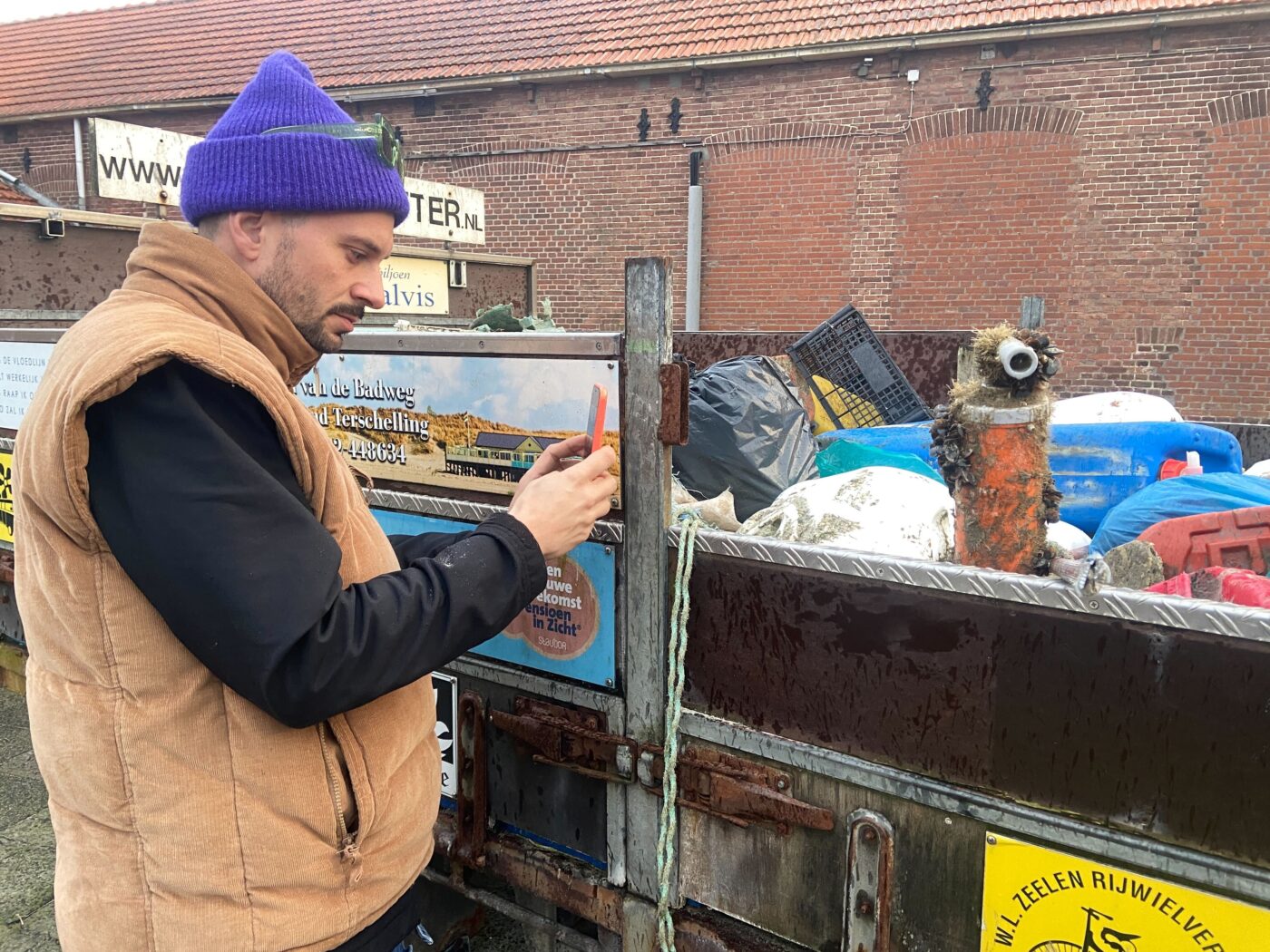
In December, Slovak artist Dávid Koronczi is staying on Terschelling for an intensive research residency within the Oerol Werkplaats.
His practice operates at the intersection of food culture, ecology, politics and storytelling — an approach in which the material itself often dictates the narrative. On the island, he investigates how ingredients, landscapes and communities shape one another, and how food can function as a sensitive instrument for listening to our changing environment.
Tasting what the soil offers
Koronczi starts from a simple yet pointed question: what does the land tell us, if we are willing to truly taste it? On Terschelling, he focuses in particular on salinisation, a process made visible here by seawater, shifting dunes and rising water levels. He sees salt not only as a chemical substance, but as a signal — a language of the soil that tries to convey something about the fragile balance between humans and nature.
As an artist, he works with materials taken directly from the landscape or from his home region: seeds from his family orchard, plants harvested during his stay, ingredients that play a role in the daily cuisine of both places. For him, these materials carry their own histories: a blend of pop culture, agriculture, local customs and even small everyday circumstances (such as the mice that occasionally share his harvest). By bringing these elements together, he explores how food holds stories and how it can act as a gateway into larger ecological and social questions.
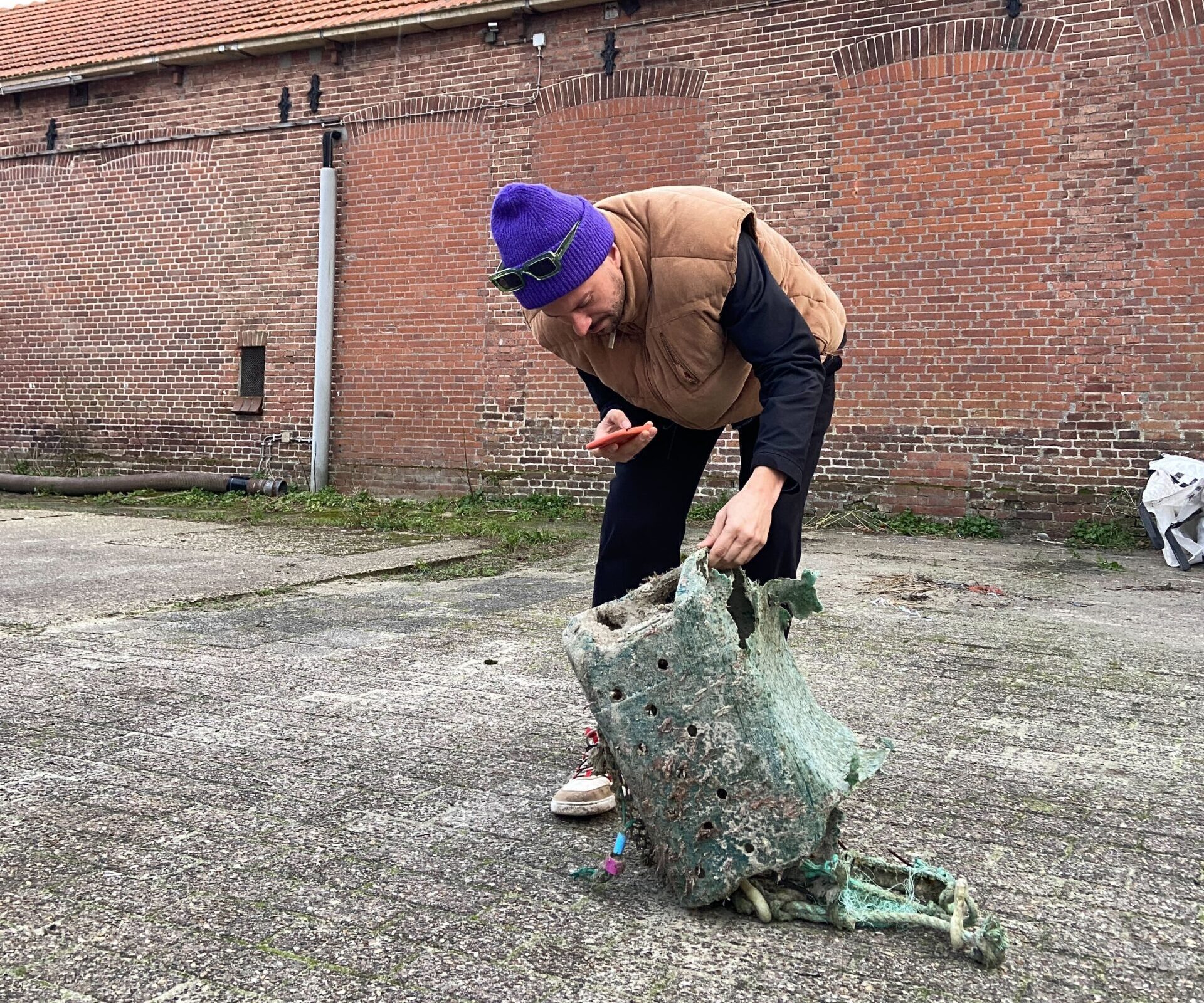
First experiments for an interactive installation
During his residency, Koronczi is developing a hybrid form that is both installation and performance. He is building a “storytelling table”: a sculptural object that serves as a central point for future encounters, conversations and tasting sessions. The work invites interaction and explores how cooking, listening, eating and telling stories can together form an artistic experience. His collaboration with musician and painter Erik Pánči plays an important role in this; their shared experiments form the first sketches of a new ritual in which sound, material and taste layer over one another.
Initial insights from the residency
Although this residency is very much a research phase, several themes are already beginning to take shape: the relationship between humans and soil, how we respond to salinisation and shifting ecosystems, the role of agriculture and food production in a time of ecological change, and the ways in which art can help us feel these issues rather than merely understand them.
Koronczi’s work moves between seriousness and play. He explores urgent questions, but always leaves room for humour, curiosity and the pleasure of tasting together. His residency on Terschelling is the first step in a longer conversation between artist, landscape and community — a conversation that will continue to unfold in the months ahead.
Koronczi’s residency is part of LAND and is made possible with support from the European Union.