Info
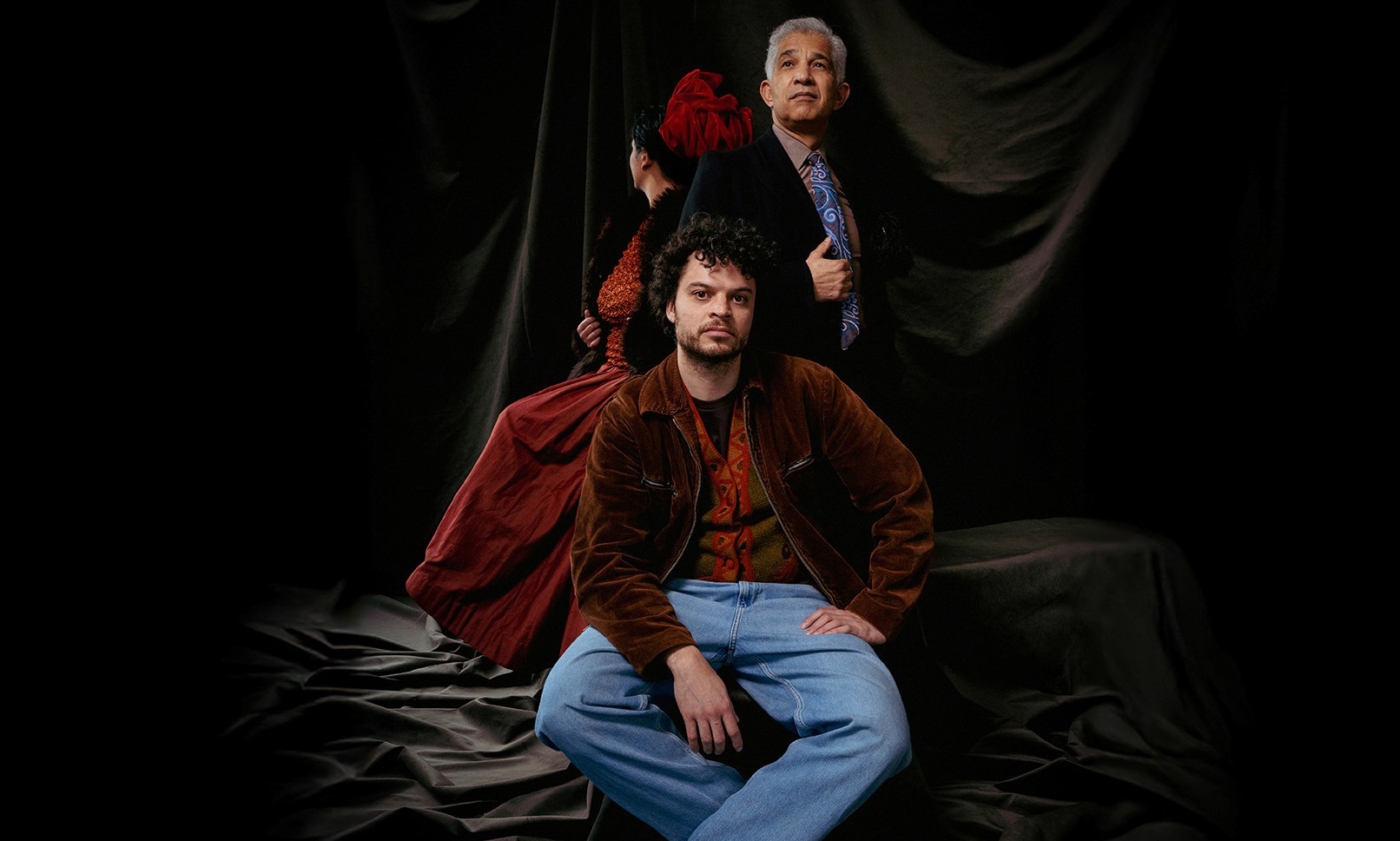


What does it mean to create an opera on Surinamese soil, shaped by European classical traditions yet rooted in Surinamese stories? Theatre maker Mathieu Wijdeven unravels what Het Pand der Goden—the first Surinamese opera, for which his great-great-grandfather designed the scenography—still has to tell us more than a century later.
Het Pand der Goden was written by Johannes Helstone (1853-1927). Helstone was born on the Berg en Dal plantation in Suriname. His musical talent was discovered by German missionaries on the plantation, the Moravians of the E.B.G. (Evangelical Brotherhood), who helped him study at the conservatory in Leipzig. Trained in the European classical tradition but rooted in Surinamese stories, rhythms, and myths, both worlds resonate in Helstone’s music. After its premiere, his opera disappeared into an archive cabinet, only to be performed again 118 years later—an event that sparked a wide range of reactions.
Mathieu Wijdeven’s great-great-grandfather, G.G.T. Rustwijk, designed the original scenography for Het Pand der Goden. Through documentary music theatre, Wijdeven explores the Western opera genre within a Surinamese context full of spirits, gods, and myths. In moving arias and a musical reconstruction, this performance at Oerol unfolds what this Surinamese opera can mean today. As the narrator, Wijdeven brings the story to life alongside opera singer Frank Dolphin Wong and pianist Djuwa Mroivili.
Accessibility info
The access route from the bicycle parking is a 200-meter forest path; this path is muddy when it rains.
Geef een stukje Oerol cadeau door een ‘Geef een toegift’-ticket te kopen, waarmee je met een kleine extra bijdrage een festivalbandje mogelijk maakt voor een ander die het goed kan gebruiken!