How do you mobilise when the threat is too vast to comprehend? How do you visualise something unfolding on a timescale our brains can barely follow? The artists in the Visual Arts programme at Oerol 2026 don’t shy away from that question. They work with wind, water, current and air as fellow players. The sea as co-creator, and the calm before the storm as a stage.
A slow, immense shift is gradually taking place in our climate — on an extraordinarily slow timescale. Far away, and yet close to home. The AMOC, the great Atlantic current that keeps our climate in balance, is weakening. Not dramatically, not overnight, but steadily and irreversibly. The news about it gets lost in the noise. We underestimate the chance that a disaster will affect us personally, we procrastinate, and acknowledging a looming catastrophe feels so overwhelming that we prefer to ignore it. We lack the urgency to act. And that is precisely where the Visual Arts programme of Oerol 2026 begins.
The gulf stream and non-human migration
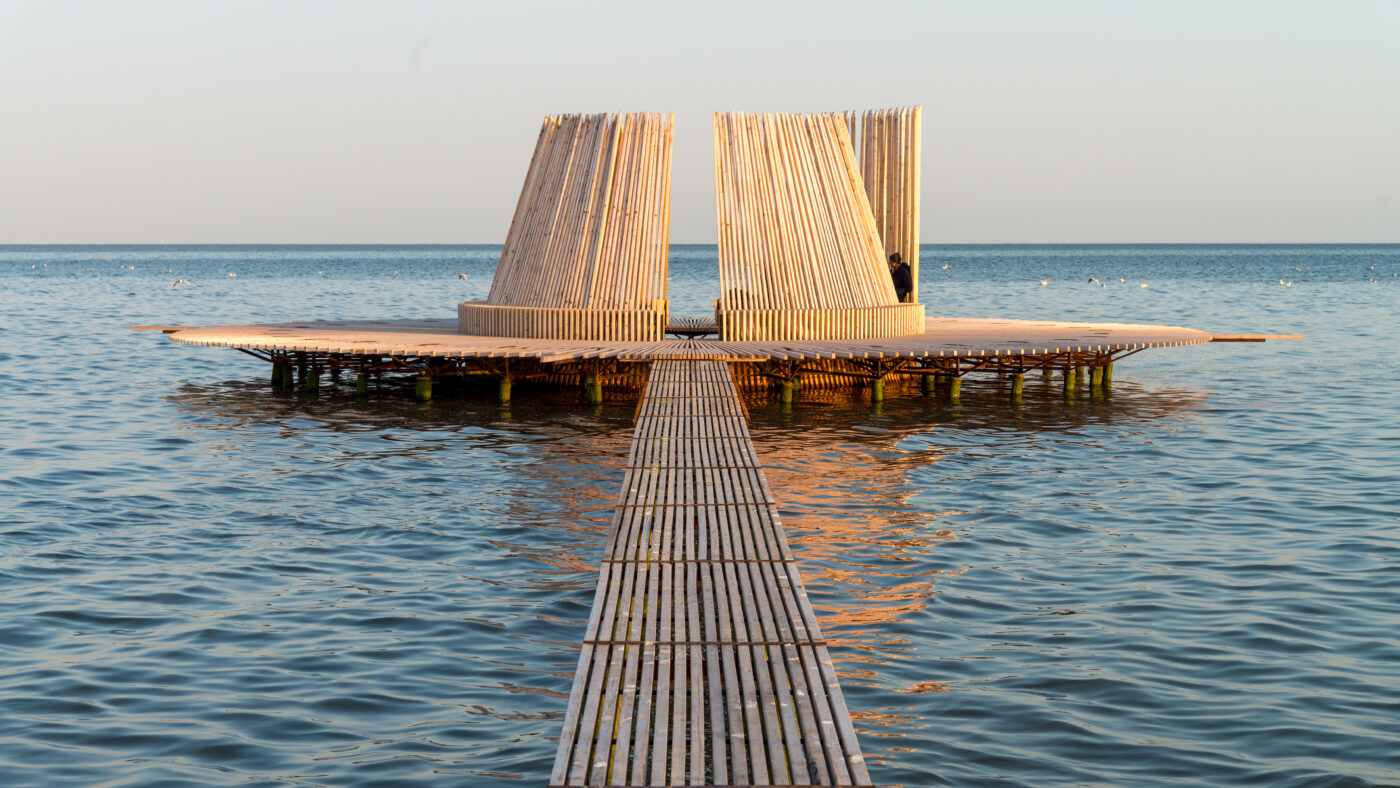
Suzette Bousema creates a work inspired by the MOC, the ocean current that moves across the entire world and extends beyond the Atlantic. A work that makes the vulnerability of this vast and elusive system visible. Marjolijn Boterenbrood literally dived into the harbour of Terschelling to place underwater structures that were slowly colonised by non-human migrants: the Australian tubeworm, the Mexican mussel, the wandering barnacle. With Marine Migrants she presents a work about migration, interconnectedness, and the hubris with which humanity has charted seas — on the mudflats along the dyke.
Drifting plankton, a hopeful soundscape and the magic of the moon
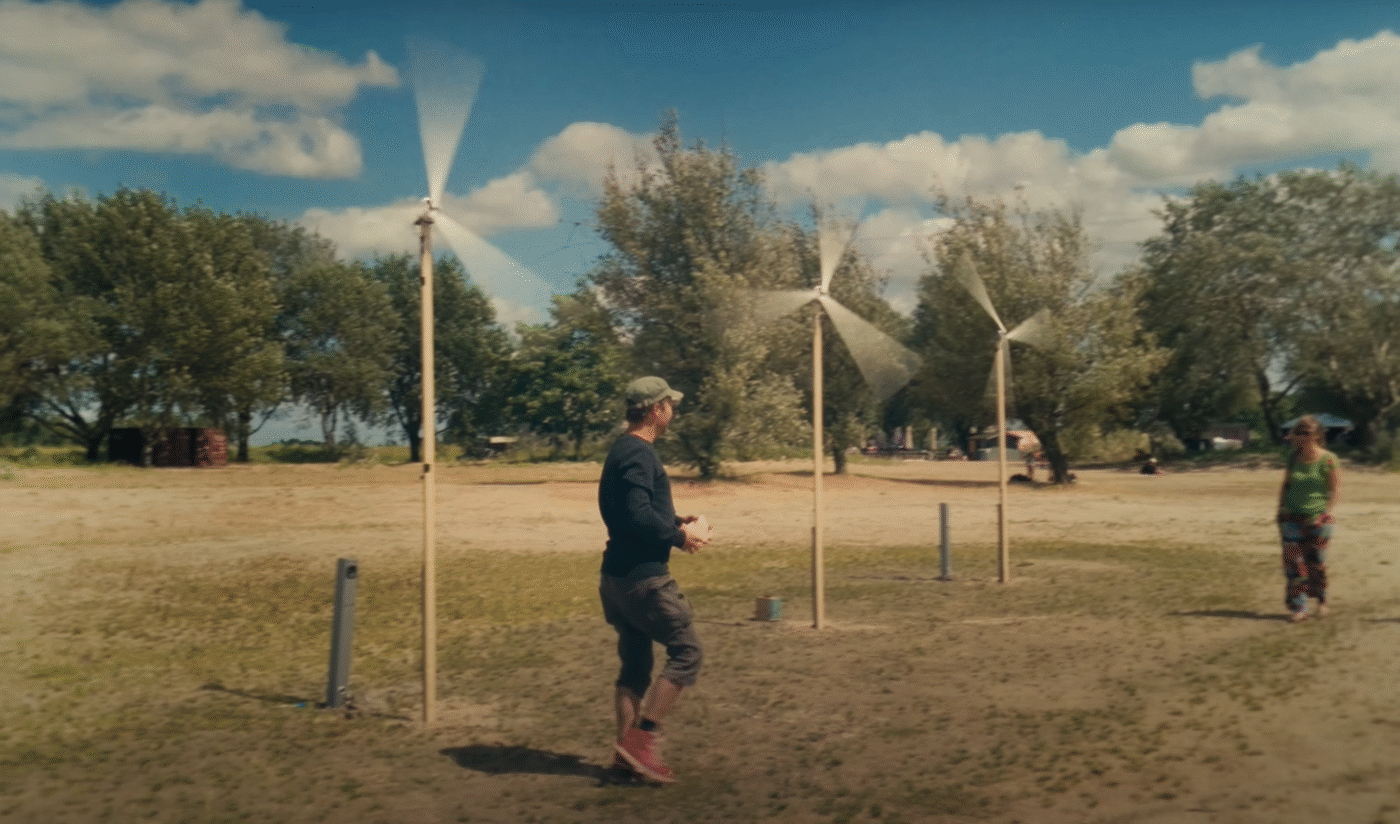
Valerie van Leersum tells, with The Wanderers, the story of the profound role of endlessly drifting plankton in marine ecosystems, and of plankton as a key indicator of environmental health. A striking work made from repurposed materials that respond to every gust of wind, inspired by Rachel Carson’s Under the Sea Wind from 1951. Dennis van Tilburg constructs a wind farm of 25 turbines that convert their energy directly into sound: a spatial soundscape moving between hope and dystopia, between guardian angel and ominous vision of the future.
Thijs Ebbe Fokkens plays, with Moon Gazer, atop the water tower in Hoorn with the magic of not-knowing and the mystery surrounding the moon. Its influence on the tides is immense, yet slowly changing — the moon drifts approximately 4 cm further from the Earth each year. The moon draws energy from the Earth’s rotation, causing our days to gradually lengthen and the difference between high and low tide to diminish.
Raaklijn, natural systems and an uncomfortable party about plastic
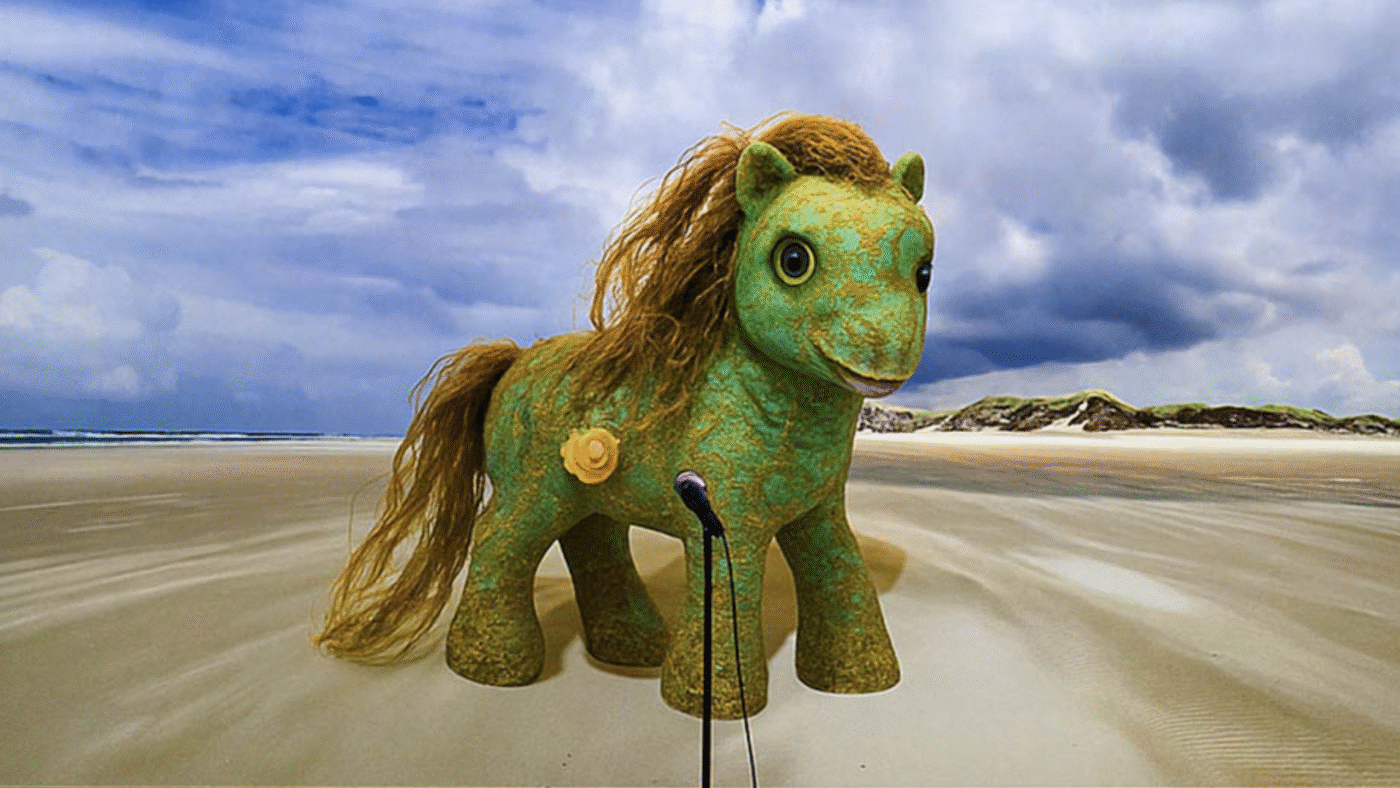
Ivan Henriques’ work Ecoshroom contains a bespoke Ai that analyses and visualises invisible processes, such as the exchange of nutrients and carbon between mycorrhiza (a fungus) and plants. With this work, Henriques demonstrates how natural systems can be integrated into an artificial world and given the ability to make autonomous choices. Nullshima Studio won the Symbio Art Prize 2025 and presents My Little Tragedy, a participatory video installation in which a weathered My Little Pony figurine from the MSC Zoë disaster invites the audience to an uncomfortably festive karaoke about everyday plastic use.
Raaklijn is the multi-year research project by SoAP / Rita Hoofwijk, exploring where Oerol touches the landscape and where the landscape sets limits on the festival. Each year she invites a different artist to explore that shifting boundary from a new perspective. For 2026, Hoofwijk collaborates with Taiwanese artist and architect Rain Wu. Wu investigates how materials, maps and landscapes carry stories — from geographical and political meanings to cosmological and microbial traces. Her Sea Water Paintings reflect on mapping as an act of imagination rather than dominance, an approach that closely aligns with the themes of Raaklijn. The exploration takes place outside the festival, during residencies, but is visible to the public during Oerol.
Residencies during the festival
This year, two artists are in residence within the Visual Arts programme during the festival. Laurien Zwaans collaborates with Prof. Dr. Ir. Tjisse van der Heide on artistic methodologies for the restoration of coastal ecosystems — a search for reciprocity between humans and nature in the dynamic Wadden landscape. Wandelende Duinen brings together local communities along various coastlines with Entangled Shorelines, through workshops, conversations and shared stories. Koopmans is one of ten artists selected for the European IN SITU Platform 2025/2026. Her work advocates for a caring, non-hierarchical way of imagining the future, rooted in local knowledge and collective action.
The return of De Streken
And then the news many Oerol visitors had been hoping for: De Streken by Marc van Vliet returns, for one final year. The tidal object on the mudflats — where the ebb and flow determine what you see and feel — has become, for many Oerol visitors, an integral part of the landscape itself. The work grew out of the friendship between Marc and Joop Mulder, the founder of Oerol who passed away in January 2021. Thanks to an overwhelming crowdfunding campaign, the work returns this year for its final edition: a farewell that is at once a tribute to Marc, to Joop, and to the landscape that always moves us.
Partnership with the Waddenvereniging
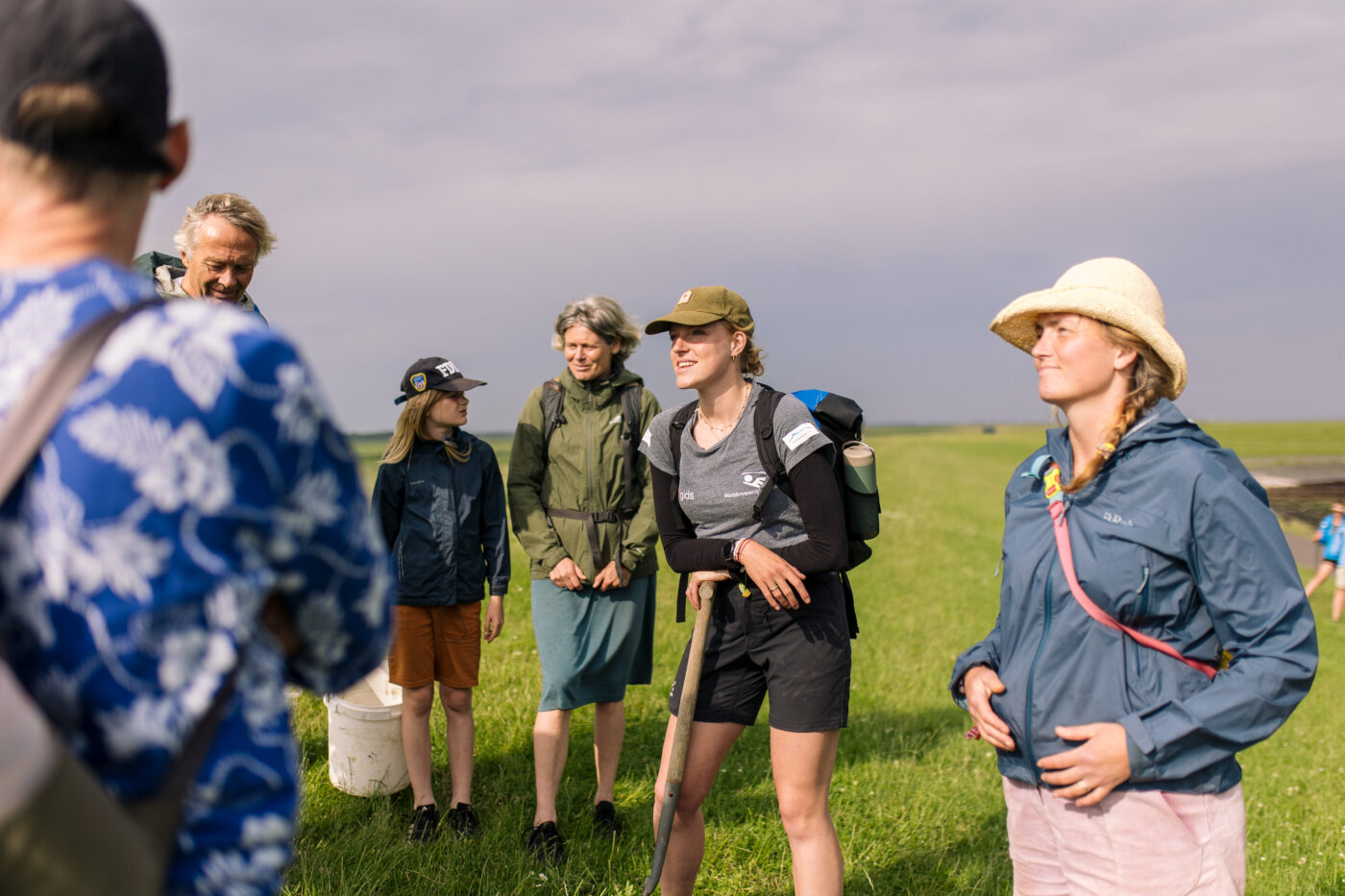
For this edition, Oerol joins forces with the Waddenvereniging (Wadden Society), a collaboration that feels as natural as the tide. Both organisations are deeply connected to the Wadden landscape as a UNESCO World Heritage Site, and to the urgency of making people feel what is at stake. Because art reaches people differently than reports or policy ever can. All works in the Visual Arts programme can be visited via the art and nature route in the Oerol map app. Around the works of Marjolijn Boterenbrood and Valerie van Leersum, the Waddenvereniging enriches the route with mudflat excursions, stories about the landscape, and guidance from rangers and ecologists — for those who want to dive even deeper into what lies beneath the surface.
The Visual arts programme can be visited daily from 13 to 21 June, between 10:00 and 16:00. The programme is accessible with an Oerol festival wristband. These are now on sale.