Oerol, Terschelling – How much longer can we keep talking about inclusive theatre? That question hung in the air during the professionals’ gathering organised by Oerol on 19 June, titled Inclusive Theatre: The Exception or the Starting Point? Theatre makers, programmers, artistic directors, educators and representatives from funding organisations came together, under the guidance of moderator Thijs de Lange, to discuss what a more inclusive performing arts sector could look like. The conclusion was unanimous: the debate about why inclusion matters is behind us. The question now is how we can start turning words into action.
The gathering built on the professionals’ meeting held during Oerol 2025. While last year’s conversation focused primarily on the need for inclusion and the conditions required for inclusive practice, this year centred on the concrete steps needed to embed inclusion structurally within the performing arts sector.
According to Oerol Festival’s Artistic Director, Sabine Pater, it is important that the sector does not remain stuck in repeatedly explaining why inclusion matters. “The movement is already underway,” she said. “The challenge now is to identify what is still missing and explore how festivals, theatres, companies, educational institutions and funding bodies can work together to create a more inclusive arts landscape.” She also stressed that inclusion is not only a matter of equity, but of artistic quality. “More perspectives lead to richer, more compelling art.”
Putting the Artist First
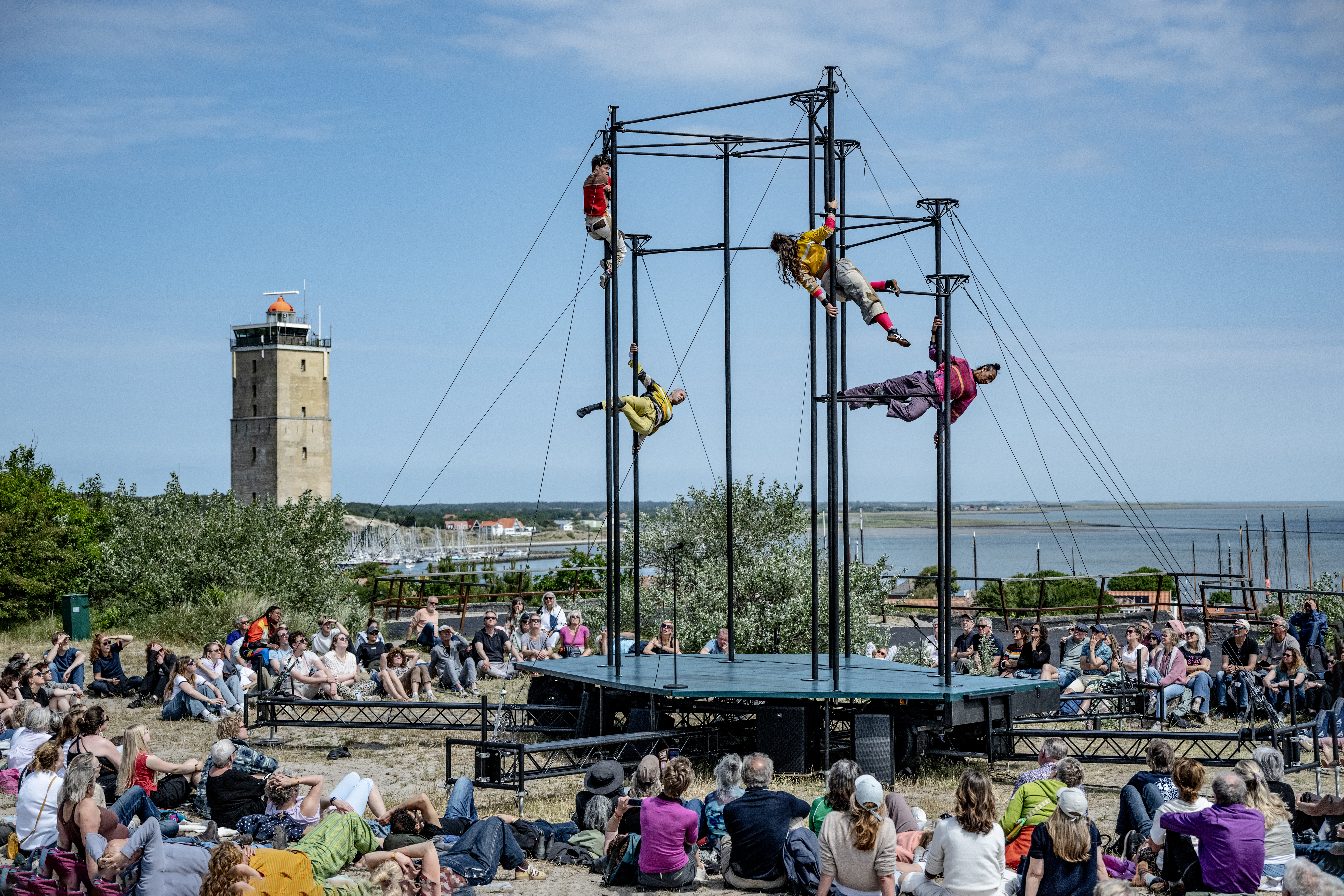
Choreographer Chloe Loftus and performer Florent Develsaver, creators of The Air Between Us, which was presented at Oerol, made it clear that inclusion means different things to different people. Loftus emphasised the importance of accessibility. If we want everyone to have equal opportunities to create, we must accept that this sometimes requires additional time, support or resources. Accessibility, she argued, is not an extra service but a prerequisite for quality.
At the same time, Develsaver questioned the way inclusion is often discussed. He rejects the idea that artists with disabilities should primarily be seen as “inclusive artists”. “On stage, I am an artist,” he said. “Like anyone else, I want the opportunity to study and prove myself artistically. My disability is part of who I am, but it is not the defining aspect of my artistic identity.”
This tension between accessibility and artistic identity ran throughout the discussion. How can we acknowledge difference without reducing artists to their disability?
For dancer and choreographer Dennis Massar, his deafness is not an artistic resource in itself. “My deafness comes with its own culture: Deaf culture. You speak a different language—sign language.” In his work, he explores how sign language and dance can merge into a new movement vocabulary. In doing so, he challenges a practice in which accessibility is often treated as an add-on to a performance rather than an integral part of the artistic process.
During his training, Massar constantly found himself having to explain what he needed in order to participate, because educational systems continue to be built around a single norm. According to him, change begins with asking a different question. Not, Can this person do it? but, How can this person do it? “Not everything has to be perfect straight away. Even small adjustments can make a huge difference.”
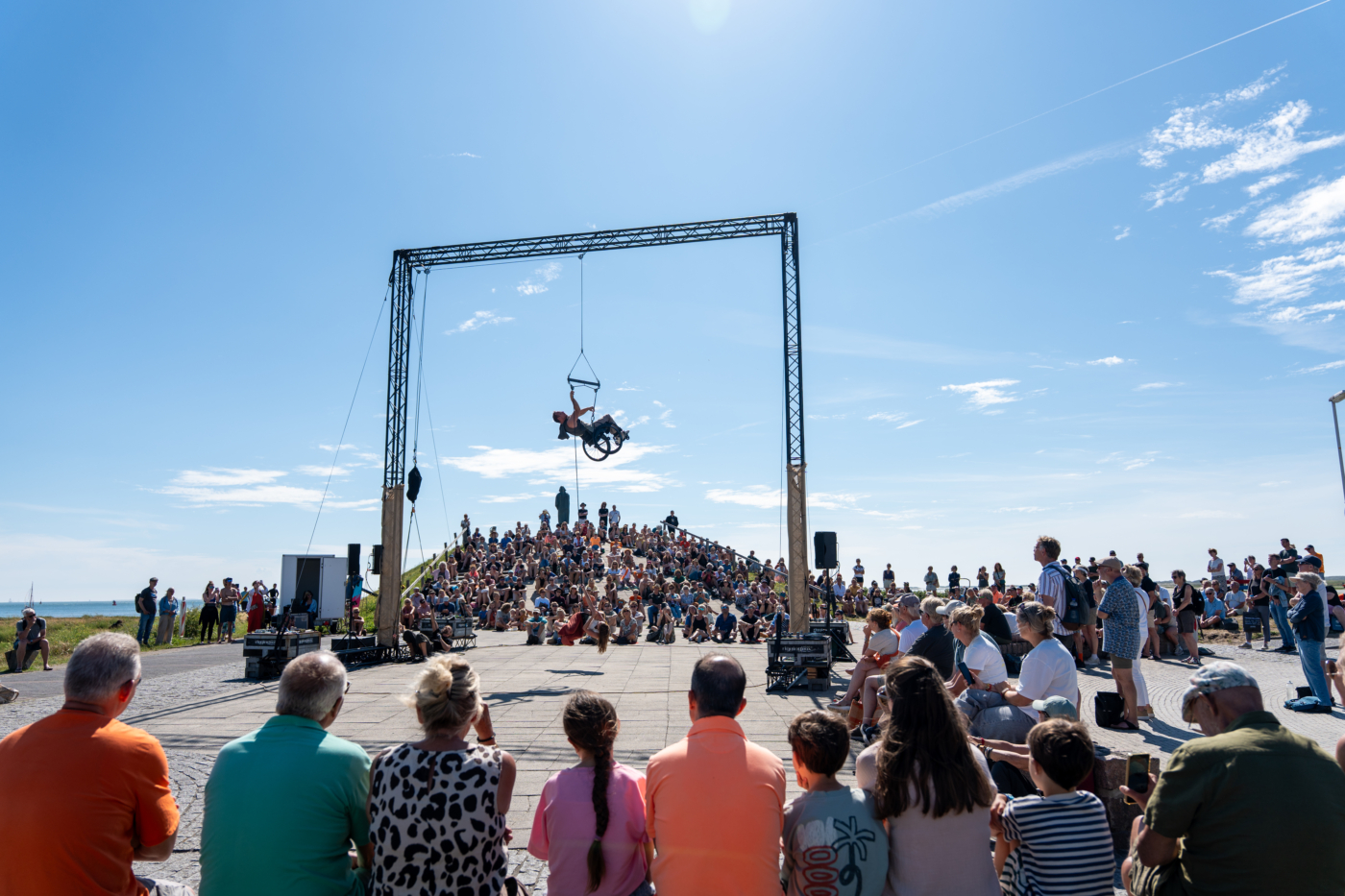
Maartje Bonarius, Artistic Director of Tall Tales, also spoke about how a physical disability radically changed her artistic practice. After developing a neurological condition that left her using a wheelchair, she had to reinvent her career as a circus artist. Today, she is once again exploring her place as a performer. Her story highlighted that inclusion is not only about gaining access to existing structures, but also about having the freedom and space to continually redefine yourself as an artist.
'More perspectives lead to richer, more compelling art.'
Cormac Burmania of ArtEZ University of the Arts observes that “there is a huge barrier—sometimes psychological, sometimes physical—to entering our institutions for arts education. It helps when inclusive theatre is simply seen as theatre, when it becomes the norm, and when it is taken for granted that people from all backgrounds will want to study theatre or dance.”
For Erik-Ward Geerlings, Artistic Director of Theater Babel, the value of inclusive theatre does not lie in performances that explicitly address disability. In his view, performers always bring their own perspective on reality to the stage, and it is precisely those lived realities that make the work artistically compelling. In practice, he sees performers from a wide range of backgrounds bringing a directness and authenticity that is difficult to replicate through conventional acting techniques.
Interestingly, within mixed ensembles it is sometimes the professionally trained actors who find themselves having to rethink their craft. “Technique alone won’t get you there,” Geerlings said. According to him, working alongside performers who create from their own lived experience challenges actors to perform more intuitively, with greater openness and less filtering.
Inclusion Starts Before Programming
Jordy Dik, Artistic Director of Compagnie Tiuri, also emphasised the importance of talent development. In his view, inclusion does not begin with festivals or programmers, but much earlier. “If people don’t have access to education, they won’t make it onto our stages either.”
He pointed out that conversations about inclusion often become stuck on everything that is still going wrong. While understandable, he believes this is not always productive. According to Dik, it is just as important to highlight what is already possible. Successful examples can inspire other organisations and help accelerate lasting change. He also cautioned against treating inclusion as a one-size-fits-all concept. Every artist, every disability and every artistic practice requires a different approach.
Tom Dello, Artistic and Executive Director of the No Limits Festival, placed the discussion in an international context. In his view, the Netherlands still lags behind countries such as the United Kingdom, where disability arts have long been recognised as an integral part of the cultural landscape. Dello referred to the social model of disability, which shifts the focus away from an individual’s impairment and towards the barriers created by society. “People are disabled by systems, not by their disabilities.”
According to Dello, both emancipation and normalisation are essential. Festivals such as No Limits play an important role in making artists visible and opening doors. At the same time, the ultimate goal should be for artists with disabilities not to remain dependent on dedicated platforms, but to become a natural part of mainstream education, theatres, festivals and performing arts companies.
Stop Talking, Start Acting
Speaking on behalf of the Bartiméus Fund, Minke Scheltema expressed her frustration at the slow pace of change. People with disabilities make up a significant part of society, yet they remain underrepresented in arts education, performing arts companies and cultural organisations.
Yu Lan van Alpen of the VriendenLoterij Fund also highlighted the responsibility of funders. Who decides what counts as quality? Which artists gain access to funding, networks and development opportunities? In her view, inclusion also requires a critical examination of the systems that shape these decisions.
Before inviting participants to attend the performances* presented within this context at Oerol, moderator Thijs de Lange concluded with a call to action for the sector: “It will only truly be inclusive when the conditions are such that everyone who wants to participate—everyone who wants to make theatre—is genuinely able to do so. That means we all have a responsibility to help move inclusive theatre forward and to work together as equals.”
Ambition
The participants made it clear that the sector does not lack knowledge, inspiring examples or good intentions. What is missing is structural commitment and sustained action. For Oerol, this points to a clear next step: ensuring that inclusive initiatives are not positioned alongside the regular programme, but become an integral part of it. This means embedding accessibility from the very start of production processes, giving artists with disabilities a visible place within the main programme, actively sharing knowledge and best practices on inclusive working methods across the sector, and creating opportunities for talent development.
Each year, Oerol brings together hundreds of arts professionals and works closely with artists, programmers, funders and educational institutions. Together, we will explore what concrete ambition we are prepared to set ourselves. What could our performing arts landscape look like five years from now? What would success look like? And what will both Oerol and the wider sector need to achieve it? So that inclusive theatre can grow from being a remarkable exception into a natural starting point.
Inclusive Theatre has been made possible in part through three years of support from the Bartiméus Fund and Fonds1999.
* The performances presented at Oerol within the context of Inclusive Theatre were: The Air Between Us by Chloe Loftus Dance, Droplines by Tall Tales Company, Hands by Dennis Massar, and two residency presentations: Leeglopen by Dominique Stevens and we read our pain as coordinates by Toni Kritzer.